









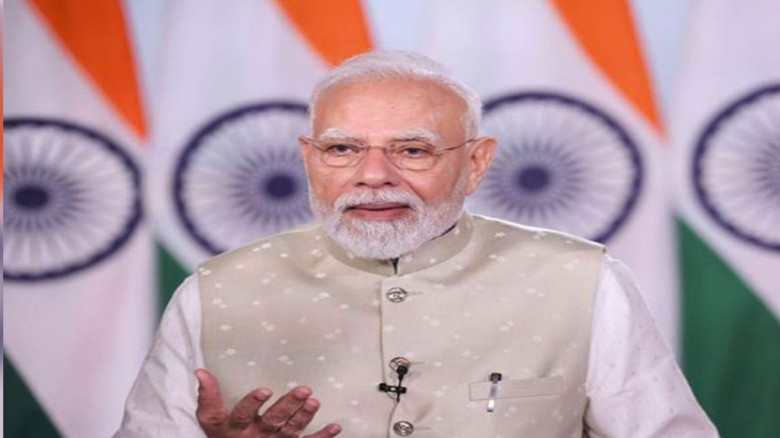
PM Modi Sets Out India’s Long-Term Sports Vision at Khelo India Dialogue
Prime Minister Narendra Modi has called for a wider grassroots sporting culture in India, saying the country must identify young talent earlier and expand participation in more Olympic disciplines as it builds towards its long-term sporting ambitions.
Modi addressed young people and athletes across India through video conference on Thursday during the Khelo India Dialogue, organised as part of the National Sports Day 2026 celebrations.
The nationwide programme brought together students, athletes and youth organisations to discuss sport, Olympic ambitions, leadership, fitness and the role of young people in India’s development.
Sports vision goes beyond winning medals
During his address, Modi said India’s sporting ambitions should not be viewed only through the number of medals won at international competitions.
He linked participation in sport with physical fitness, discipline, confidence, resilience and youth development, arguing that a stronger sporting culture could contribute to the wider goal of building a developed India.
The Prime Minister said success by an athlete can also raise the profile of the school, district and state from which the player emerges.
He called for greater attention to sporting potential at district level and said young talent should have a pathway from initial identification to elite international competition.
National talent search to focus on children aged 5 to 15
A major element of the government’s strategy is a national talent-identification programme focused on children between the ages of five and 15.
Modi said sporting aptitude should be identified early so children can receive training suited to their abilities and physical characteristics.
The initiative is also being linked with India’s longer-term Olympic ambitions, including preparations for 2036.
The Prime Minister said the government would support young athletes as they progress through training and competition.
He also stressed the importance of using scientific methods to identify talent rather than relying only on athletes already competing at an advanced level.
India urged to compete in more Olympic disciplines
Modi highlighted the number of Olympic sports in which India has historically had little or no representation.
He noted that at the 2012 Olympic Games India competed in only 13 sports, arguing that a country cannot substantially expand its medal opportunities if it does not participate across a broader range of disciplines.
The Prime Minister called for greater investment in sports where India has geographical or physical advantages but has yet to establish a major international presence.
He pointed to India’s long coastline and mountainous regions as potential bases for developing sports including surfing, climbing and winter disciplines.
The strategy, he said, should involve identifying regions naturally suited to particular sports and creating specialised training ecosystems around them.
Greater focus on training and sports science
Modi also outlined the need for a modern support system capable of taking talented athletes from grassroots competition to the international stage.
This includes specialised training centres, sports universities and greater use of sports science.
International cooperation in coaching, athlete development and training methods is also being expanded as India seeks to improve performances at major global competitions.
The Prime Minister said athletes require support at every stage, from initial talent identification to high-performance training.
Schools encouraged to give sport greater importance
Schools and educational institutions were another major focus of the address.
Modi argued that physical activity should not be treated simply as an optional extracurricular activity and called for sport to become a stronger part of everyday school life.
He said children need access to playgrounds and sporting facilities alongside their academic education, stressing that time spent participating in physical activity should be valued more highly.
The Prime Minister also pointed to expanding career opportunities beyond becoming a professional athlete.
Sports technology, equipment design, medicine, nutrition, psychology, coaching and performance analytics are among areas offering increasingly specialised careers.
Sport linked with campaign against drug abuse
The Khelo India Dialogue also included discussion of the role sport can play in keeping young people away from substance abuse.
One of the programme’s central themes was “Nasha Mukt Yuva”, or drug-free youth.
Modi said regular participation in sport could strengthen discipline and provide young people with positive goals and routines.
The broader dialogue focused on five areas — sport, Olympic aspirations, youth leadership, Viksit Bharat and efforts to combat drug abuse among young people.
Mandaviya highlights changing sports ecosystem
Union Youth Affairs and Sports Minister Mansukh Mandaviya said India was increasingly treating sport as a national priority rather than simply a recreational activity.
He also highlighted the government’s focus on transparency and accountability in sports administration and said athletes were receiving improved access to equipment and support.
Mandaviya said more than 2.4 crore young people had joined the MY Bharat platform and were participating in different youth and nation-building initiatives.
Gagan Narang and Sheetal Devi share experiences
Olympic shooting medallist Gagan Narang also participated in the programme and spoke about changes in the support available to athletes preparing for international competition.
Paralympic archer Sheetal Devi shared her experience as a para-athlete and discussed changing attitudes towards athletes with disabilities.
Their participation formed part of the programme’s wider effort to connect young people with established athletes and encourage greater participation in sport.
National Sports Day honours Major Dhyan Chand
The Khelo India Dialogue was organised ahead of National Sports Day, observed annually on August 29 to mark the birth anniversary of Indian hockey legend Major Dhyan Chand.
This year’s programme placed particular emphasis on identifying future Olympic athletes, expanding India’s participation across sporting disciplines and strengthening grassroots infrastructure.
Modi said the success of India’s future sporting strategy would ultimately depend on creating opportunities for young people across districts and ensuring promising athletes receive sustained support as they progress towards national and international competition.


Leave A Comment