






Sikkimese Filmmaker Tribeny Geeta Rai’s ‘Shape of Momo’ Wins Two Awards at Busan International Film Festival
Sikkimese Filmmaker Tribeny Geeta Rai’s ‘Shape of Momo’ Wins Two Awards at Busan International Film Festival
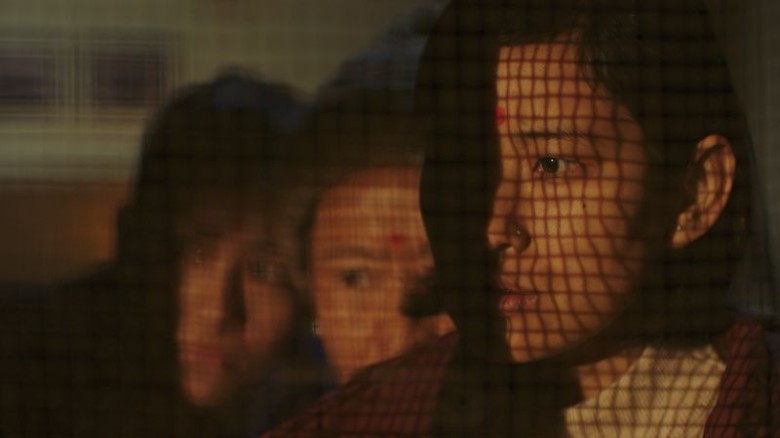
Sikkimese filmmaker Tribeny Geeta Rai’s debut feature film, Shape of Momo, has won two major honours at the recently concluded Busan International Film Festival (BIFF) — the Taipei Film Commission Award and the Songwon Vision Award in the festival’s Vision Section.
The Nepali-language film, set against the backdrop of the Himalayan region, explores the emotional and social journeys of women navigating generational expectations and traditional norms.
Speaking to PTI after the win, Rai said, “Busan gave credibility to our work. It is special for a film from Sikkim, in Nepali, to be seen at such a platform. It gave visibility and connected us with audiences who share cultural similarities across Asia.”
Expressing her joy over the double victory, she added, “We are over the moon that our film has won two awards at Busan, and I thank our incredible cast and crew for bringing this story to life. Awards add credibility, but with or without them, we would still be the same bunch of filmmakers — searching and persevering.”
A Story Rooted in the Himalayas
The 114-minute film follows the story of Bishnu, a young woman who returns to her Himalayan village after quitting her job. As she navigates family pressures and social expectations, Bishnu finds herself at a crossroads between tradition and independence. The plot intensifies with the arrival of her pregnant sister and her growing bond with a “suitable” young man.
Rai explained that the story drew inspiration from her personal experiences. “The film came from a personal need to express myself. Women from rural areas struggle to be independent, and when they do, they often feel caught between the city and the village,” she said.
She added that she felt this conflict deeply when she returned to her own village, Nandok in East Sikkim, after completing her studies at the Satyajit Ray Film and Television Institute (SRFTI) in Kolkata.
“The film is, however, more than my own story,” Rai said. “It is a layered and nuanced reflection on gender, class, and the struggles of ordinary people to live on their own terms.”
Filmmaking as Reflection
Rai described filmmaking as an honest reflection of life, saying she aimed to present women’s experiences with authenticity and sensitivity.
“My job as a filmmaker is to be observant. Like any other art form, cinema is a way of getting closer to understanding what life is. I also believe that cinema is not merely a spectacle or an escape; its essence lies in the smaller details that gradually reveal a larger universe,” she explained.
Rai worked closely with a team of professionals, many of whom were graduates from India’s top film schools, including SRFTI and FTII. “It was very important for me to work with like-minded people, as it made the entire process deeply collaborative and meaningful,” she said.
She credited Kislay, the film’s co-writer, co-editor, and one of its producers, for being instrumental in bringing Shape of Momo to life. “I don’t think I would have been able to make this film without Kislay,” she added.
Challenges and Creativity in Independent Filmmaking
Rai acknowledged that the Sikkim film industry is still in its early stages, and independent filmmakers often face numerous challenges.
“I thought making the film would be the hardest part, but I have since learned that figuring out what to do with the film after making it can be even more difficult,” she said.
She also pointed out that working with a limited budget came with its own hurdles but also unique advantages. “The lack of resources pushed us to be more creative and resourceful. It helped us discover new ways to tell our story,” she said.
From Doordarshan to the Big Screen
Reflecting on her early life, Rai said that she grew up in a household with limited access to television. “Until Class 10, I mostly watched Doordarshan. That limitation encouraged me to read stories, which nurtured my love for storytelling,” she recalled.
Her journey into filmmaking, she said, was not marked by a single defining moment but rather by “a series of influences and experiences” that gradually shaped her path.
“The love for storytelling grew naturally and eventually brought me to filmmaking,” she said.
Looking Ahead
As for her next project, Rai said she is currently developing ideas but hasn’t finalized her next script. “There are a couple of ideas I’m working on, but they’re still evolving,” she said. “I do know that my next work will continue to explore the nature of human beings, as that is what intrigues me the most at this point in my life.”
With Shape of Momo earning international recognition, Rai’s success marks a significant milestone for Sikkimese and Nepali-language cinema, highlighting the growing visibility of films from India’s Northeast on the global stage.


Leave A Comment