

‘DDLJ’ @ 30: The Train That Changed Bollywood Forever
‘DDLJ’ @ 30: The Train That Changed Bollywood Forever
From ‘Jab We Met’ to ‘Yeh Jawaani Hai Deewani’, filmmakers continue to revisit the iconic train moment that defined love on screen.
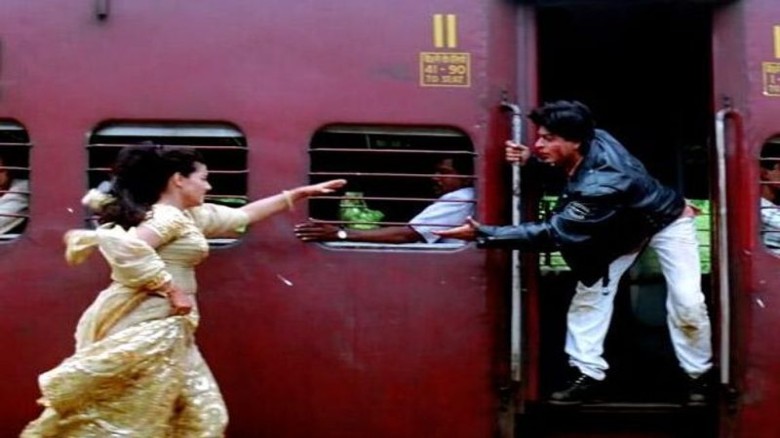
Thirty years ago, a young woman in a green outfit sprinted toward a moving train while a man stretched out his hand — and Hindi cinema was never the same again. The climactic scene from Dilwale Dulhania Le Jayenge (DDLJ), where Kajol’s Simran runs to catch Shah Rukh Khan’s Raj, has become one of Bollywood’s most enduring symbols of love and freedom.
Directed by Aditya Chopra, the film — which released in 1995 — celebrates its 30th anniversary this month. From then till now, the train sequence has transcended generations, becoming a storytelling motif revisited time and again by filmmakers eager to recreate that magic.
The Train That Began and Ended a Love Story
In DDLJ, trains serve as both the beginning and the culmination of Raj and Simran’s love story. Their first meeting happens aboard a train, and their final union takes place on another — blessed by Simran’s stern father Baldev Singh’s now-legendary words: “Ja Simran ja, jee le apni zindagi.”
The moment has become so iconic that even Shah Rukh Khan himself couldn’t resist parodying it years later. In Chennai Express (2013), SRK’s character helps Deepika Padukone’s Minnamma catch a train — a light-hearted homage by director Rohit Shetty, a self-professed DDLJ fan. “It was done in good taste… Rohit created it beautifully,” said writer Sajid of the Sajid-Farhad duo in a past interview.
From Romance to Reinvention: The DDLJ Effect
Over the past three decades, the “train of love” has appeared in numerous films — each reimagining the scene in its own way.
-
Jab We Met (2007): Imtiaz Ali’s romantic drama features not one, but two train sequences. Shahid Kapoor’s Aditya and Kareena Kapoor Khan’s Geet first meet on a train — a journey that sparks a story of self-discovery and love. Later, Shahid helps Kareena board a moving train, a gesture symbolic of letting go of fear and embracing life.
-
Son of Sardaar (2012): Ajay Devgn and Sonakshi Sinha paid a comic tribute to the classic scene. As Sonakshi runs to catch the train, Ajay reaches out to help her — only to fall off himself, turning romance into laughter.
-
Yeh Jawaani Hai Deewani (2013): Ranbir Kapoor lends a hand to Deepika Padukone in a sweet echo of the DDLJ moment, marking the start of their onscreen friendship and eventual love.
-
Shubh Mangal Zyada Saavdhan (2020): Director Hitesh Kewalya redefined the sequence within a same-sex love story. The film begins and ends on trains — symbolising equality and love without boundaries. “There was no better visual than that extended hand,” Kewalya told PTI. “It captures the essence of love — in every form.”
-
Half Girlfriend (2017): Arjun Kapoor and Shraddha Kapoor recreated their own “DDLJ moment,” even sharing the shot on social media with that caption.
-
Humpty Sharma Ki Dulhania (2014): Director Shashank Khaitan’s tribute to DDLJ was open and affectionate — a modern rom-com inspired by Raj and Simran’s timeless chemistry.
A Scene That Refuses to Age
What makes the DDLJ train sequence timeless isn’t just nostalgia — it’s what it represents: the courage to chase love, freedom, and happiness against all odds.
For a generation raised on SRK’s outstretched hand, the image has become shorthand for romance itself. Whether it’s reinterpreted with humour, modernity, or inclusivity, each version of the scene is a reminder that DDLJ didn’t just define the 1990s — it continues to steer Bollywood’s love stories, even three decades later


Leave A Comment