






iQIYI Recreates Lost 1938 Chinese Film Using NadouPro AI, Shortlisted for Golden Rooster Awards 2026
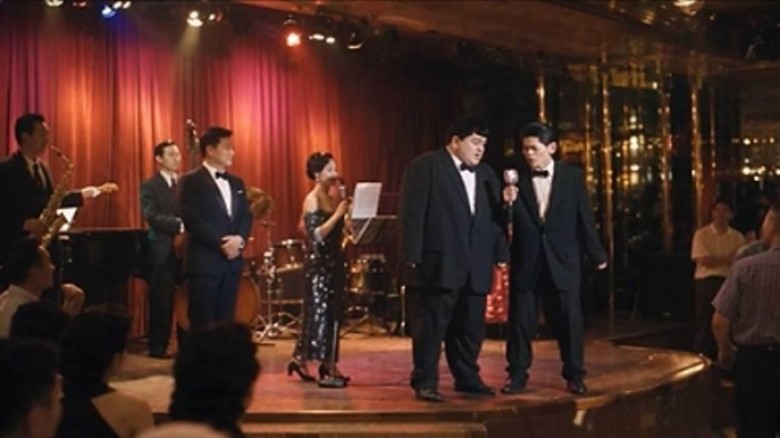
Chinese online entertainment company iQIYI has announced the recreation of a nearly 90-year-old lost film using artificial intelligence, with the project shortlisted for the 2026 Future Images AI Unit at the 39th Golden Rooster Awards.
The announcement was made in Beijing on November 6, 2026. The project involved reconstructing Visiting Shanghai after Sixty Years, a Chinese science-fiction comedy originally released in 1938.
The historic film explored an imagined future, presenting a fictional vision of Shanghai 60 years later. It is regarded by iQIYI as one of China's early examples of science-fiction filmmaking.
However, the film's original prints, reels and scripts had disappeared over the decades. With no surviving moving footage available, conventional film restoration techniques could not be used.
An eight-member team at the iQIYI-Xiamen University Joint Laboratory of Film Restoration completed the reconstruction in approximately two months using the company's NadouPro artificial intelligence platform.
The researchers used surviving photographs, promotional posters and historical newspaper reports as references to develop a new interpretation of the missing film.
Unlike traditional restoration, which repairs existing footage, the project required the creation of entirely new moving images. Consequently, the result is a creative reconstruction rather than an exact recovery of the original 1938 production.
One of the main technical challenges involved maintaining consistent character appearances throughout the film. The production team used NadouPro to establish digital character models containing information about facial features, body proportions and costumes.
The company also used NadouPro's 3D Director Studio to control character positions, camera angles and movement. These features were intended to give filmmakers greater control over the final visual sequences.
The reconstructed production uses different visual approaches to distinguish between its two historical settings. Scenes set in 1938 draw on early black-and-white cinema, while those depicting 1998 use a more documentary-style presentation.
Director Enji Yang explained that the production followed established filmmaking processes, including script analysis, character development, scene planning and storyboarding, before applying AI tools.
Zidong Jiang, iQIYI's Director of AI Restoration Technology, said the absence of original footage required the team to approach the project differently from its previous restoration work.
iQIYI has been developing AI-assisted film restoration technology since 2017. Its ZoomAI system uses techniques including noise reduction, scratch repair, image enhancement and frame interpolation to improve surviving film material.
The company has also worked with Xiamen University to restore older films in 4K resolution. The latest project represents an expansion from improving existing recordings to creating new interpretations of films that can no longer be viewed in their original form.
The reconstruction has been shortlisted for the Future Images AI Unit at China's 39th Golden Rooster Awards. However, being shortlisted does not mean that the film has won an award.
The project demonstrates a potential application of generative AI in preserving and interpreting cinema history. It also raises questions about historical authenticity, because AI-generated scenes may reflect modern creative decisions rather than the exact content of the lost original.
While iQIYI says the technology could help audiences rediscover forgotten films, the historical accuracy and artistic value of such reconstructions will depend on the available source materials and the decisions made by filmmakers.


Leave A Comment