






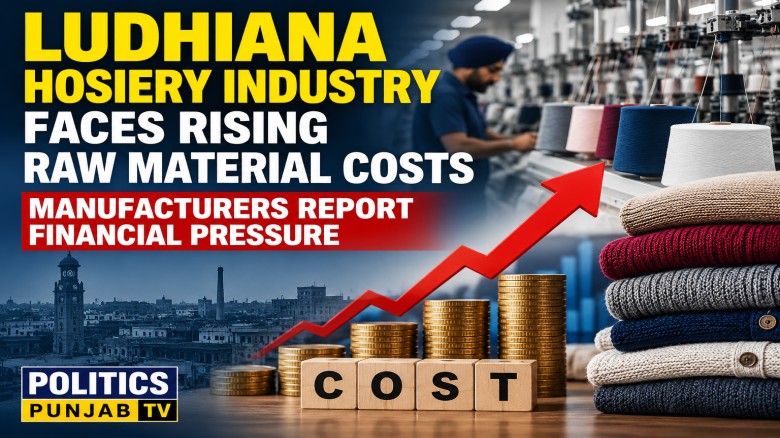
Ludhiana Hosiery Industry Faces Rising Raw Material Costs as Manufacturers Report Financial Pressure
Ludhiana, October 29, 2026: Punjab's hosiery and knitwear industry is facing increasing financial pressure as rising raw material prices, global economic uncertainty and changing market conditions affect manufacturers in Ludhiana, one of India's largest textile production centres.
Industry reports indicate that the cost of several important raw materials has increased by approximately 40 per cent in recent months, creating difficulties for businesses involved in the production of winterwear, garments and other textile products.
Ludhiana, widely recognised as a major hub for India's winter clothing industry, accounts for a substantial share of the country's winterwear production. The city supplies clothing to markets across India, making its manufacturing performance important to the wider textile sector.
Manufacturers have reported sharp increases in the prices of polyester, nylon and other synthetic fibres used in garment production. Higher crude oil prices and disruptions affecting international supply chains have contributed to increased production expenses.
According to industry representatives, businesses are struggling to pass these additional costs on to customers because of competition and concerns over consumer demand. As a result, profit margins have come under pressure, particularly among smaller manufacturers operating with limited financial resources.
The challenges extend beyond synthetic materials. Cotton prices have also experienced fluctuations due to supply constraints, changes in international demand and increased competition for raw materials. These developments have added further uncertainty for manufacturers dependent on cotton yarn.
Industry representatives have warned that rising operating expenses are affecting production decisions and the ability of businesses to fulfil orders at previously agreed prices. Some manufacturers have reportedly reduced production capacity while reviewing their financial commitments.
Small and medium-sized enterprises are particularly exposed to these difficulties because they often lack the financial reserves available to larger companies. Continued increases in input costs could place additional pressure on employment and business activity if market conditions fail to improve.
The situation has also raised concerns about the competitiveness of Punjab's textile industry in domestic and international markets. Manufacturers must balance increasing production costs against changing demand while competing with suppliers from other manufacturing centres.
Despite these challenges, Ludhiana remains an important part of India's textile manufacturing network, supported by established industrial infrastructure, skilled workers and longstanding business relationships.
Industry stakeholders are closely monitoring raw material prices, international market developments and domestic demand as businesses prepare for the winter clothing season. Greater price stability and improved supply conditions could help manufacturers recover some of the financial pressure experienced in recent months.


Leave A Comment