








Wounded but Still Dangerous: Iran Retains Powerful Options for Retaliation Amid Rising US Tensions
Washington/Tehran — As tensions between the United States and Iran intensify, security experts warn that Tehran, despite recent military setbacks and internal pressures, still possesses significant capabilities to retaliate if Washington launches a military strike.
The US has recently increased its air and naval presence in the Middle East while President Donald Trump has signaled the possibility of military action and even hinted at regime change. The developments have raised concerns about a potential wider regional conflict and its global consequences.
Analysts say Iran, unable to match US military strength directly, has spent decades preparing asymmetric strategies aimed at imposing heavy military, political, and economic costs.
Missile and Drone Threat
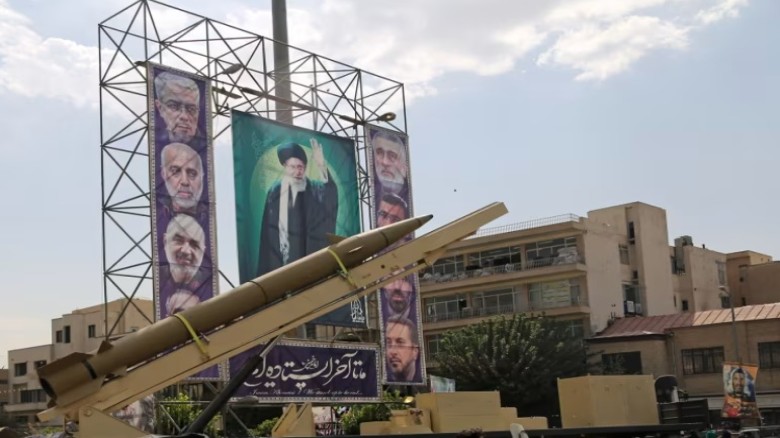
Iran’s most immediate response option lies in its large arsenal of missiles and drones. Officials believe Tehran maintains thousands of ballistic missiles and unmanned aerial vehicles capable of targeting US military bases across the Middle East as well as Israel.
Recent conflicts have demonstrated the effectiveness of these systems. Iranian forces previously launched waves of missiles and drones at Israeli targets, some of which penetrated advanced air defense systems. US officials say these battle-tested weapons remain a serious threat to American forces stationed in the region.
With an estimated 30,000 to 40,000 US troops deployed across multiple Middle Eastern bases, many installations are within range of Iran’s short-range missiles and attack drones.
Regional Proxy Network
Iran could also rely on allied militant groups across the region. Although Israel has weakened several of Tehran’s proxy forces over the past two years, groups such as Iraq’s Kataeb Hezbollah, Harakat al-Nujaba, and Yemen’s Houthi movement have pledged support if Iran comes under attack.
The Houthis, in particular, remain capable of targeting international shipping and regional infrastructure. However, experts note that some proxy groups face political and military constraints, especially in Lebanon and Iraq, where domestic pressures and government oversight limit their operations.
Economic and Energy Disruption
Perhaps Iran’s most powerful leverage lies in its ability to disrupt global energy markets. The country sits along the Strait of Hormuz, a critical shipping route through which more than 20% of the world’s oil and a significant portion of liquefied natural gas pass.
Iran has repeatedly threatened to block the strait in the event of a major conflict. Analysts warn that even partial disruption could send global oil prices soaring, disrupt supply chains, and increase the risk of a worldwide economic slowdown.
Experts describe such a move as a high-risk option that could also harm Iran’s own economy and regional partners, making it likely a last-resort measure.
Naval and Asymmetric Capabilities
Iran has also developed naval assets designed for asymmetric warfare, including fast attack boats, sea mines, drones, and submarines. Military analysts say these tools could complicate commercial shipping and create instability in the Persian Gulf.
Historical precedents highlight the potential impact. During the 1980s “Tanker War,” Iranian mines damaged US naval vessels, while more recent incidents have targeted oil tankers during periods of heightened tension.
Escalation Risks
Security specialists say Iran’s response would depend on how seriously its leadership perceives the threat. If Tehran views a US strike as an existential challenge, it could deploy multiple strategies simultaneously, raising the risk of a broader regional conflict and global economic disruption.
“The next conflict may not begin on land but at sea,” one analyst noted, pointing to the strategic importance of energy routes in the Gulf.
With diplomatic efforts ongoing but military preparations increasing, the situation remains volatile, and any escalation could carry far-reaching consequences beyond the Middle East.


Leave A Comment