









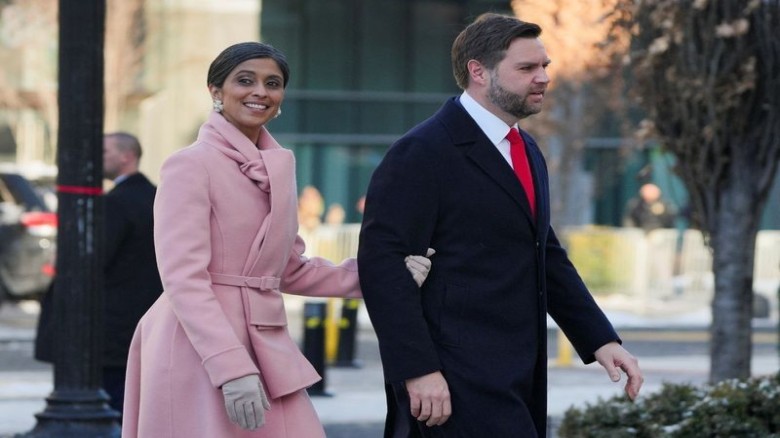
Usha Has No Plans to Convert: US VP J.D. Vance Clarifies Amid Interfaith Marriage Row
Washington, November 1:
Amid mounting criticism over his remarks about interfaith marriage, U.S. Vice President J.D. Vance clarified on Friday that his wife, Second Lady Usha Vance, has no plans to convert to Christianity, though he expressed hope that “she may one day see things as I do.”
Vance, who is married to Usha—a Hindu by upbringing—came under fire after comments he made during a Turning Point USA event at the University of Mississippi. Responding to a question about his interfaith marriage, Vance had said he hopes his wife is “moved by the same thing that I was moved in by church,” sparking backlash online.
Critics accused the Vice President of disrespecting his wife’s faith, with one social media post calling his comments “weird” and accusing him of undermining her religion.
In a detailed response on X (formerly Twitter), Vance condemned the attacks, calling them “disgusting” and rooted in “anti-Christian bigotry.” He clarified that the question came from someone curious about his interfaith marriage and said he chose to answer honestly.
“My Christian faith tells me the Gospel is true and good for human beings,” Vance wrote. “My wife is the most amazing blessing I have in my life. She encouraged me to reengage with my faith many years ago.”
He reiterated that while Usha is not a Christian and has no intention of converting, he continues to respect her beliefs.
“Like many in interfaith marriages, I hope she may one day see things as I do. Regardless, I’ll continue to love and support her,” he added.
At the university event, Vance also mentioned that Usha often attends church with him on Sundays.
“If she doesn’t [convert], that’s fine. God gives everyone free will. You work that out with the person you love,” he said.
Defending his earlier comments, Vance concluded his post by asserting that sharing one’s beliefs is a natural part of faith:
“Yes, Christians have beliefs—and one of those is wanting to share them. That’s completely normal.”
The episode has reignited debate in U.S. political and social circles about interfaith relationships and the intersection of personal faith and public life.


Leave A Comment