


Indian High Commissioner Accuses RCMP of Investigating "Fantasy" Claims Against India
Indian High Commissioner Accuses RCMP of Investigating "Fantasy" Claims Against India
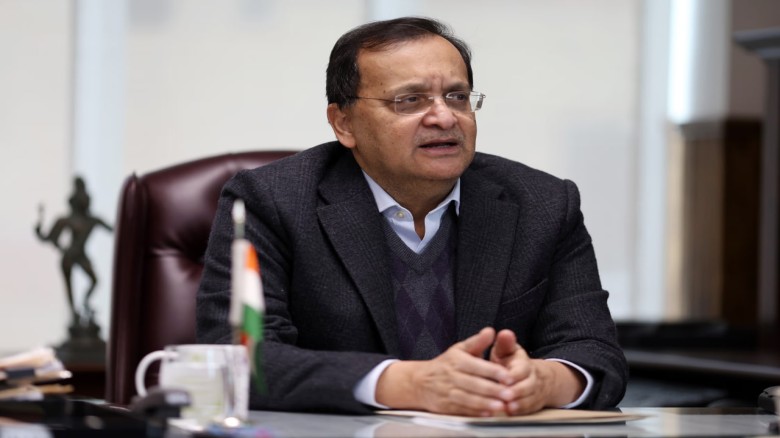
India’s top diplomat in Canada has accused Canadian security agencies of pursuing what he described as “fantasy” allegations against Indian officials, as tensions continue over claims of foreign interference and the killing of Sikh activist Hardeep Singh Nijjar.
In an interview with The Globe and Mail, Indian High Commissioner to Canada Dinesh Patnaik strongly rejected allegations that the Government of India has been involved in criminal activity, homicide plots or foreign interference campaigns on Canadian soil.
Patnaik claimed that Canada’s national security system has been influenced by Sikh separatist groups who support the creation of Khalistan, a proposed independent Sikh state in northwest India.
He also alleged that the Canadian Security Intelligence Service, known as CSIS, has been politically compromised. He suggested that Khalistani groups may have influenced Canadian intelligence officers to report false claims against India.
Canada’s Public Safety Minister Gary Anandasangaree rejected those allegations, saying any suggestion that CSIS is compromised is false. He said the Canadian government has full confidence in the agency’s integrity, independence and role in protecting national security.
The latest comments come as Canada and India are attempting to rebuild diplomatic ties after a major breakdown in relations following Nijjar’s killing in British Columbia in June 2023.
Patnaik said the investigation into Nijjar’s killing has been politicised and “twisted around”. He said the RCMP is an independent and professional organisation, but claimed that in the past it had been vulnerable to political direction.
The RCMP declined to directly respond to Patnaik’s remarks, saying it continues to engage with India and recognises the importance of the relationship.
Earlier this month, CSIS said in its annual report that India has used surveillance and other coercive tactics to suppress criticism of the Indian government and create fear within communities in Canada.
Patnaik dismissed those claims as baseless, but said it was possible that rogue individuals could be operating without direction from New Delhi.
He said Canada and India may have disagreements, but allegations of Indian government involvement in crimes against Canadians were not based in reality.
The Indian diplomat also denied that Indian diplomatic missions in Canada were used for covert activities. He said the seven Indian officials expelled after Nijjar’s killing were not doing anything improper.
Canadian media reports have previously said national security officials were given intelligence alleging that Indian consular staff in Vancouver supplied information that helped in Nijjar’s assassination. India has denied involvement.
Patnaik said the real security threat in Canada comes from extremist elements within the Khalistan movement. He accused Ottawa of protecting separatists whom India alleges are linked to violence.
He also criticised Canada’s decision to expel former Indian high commissioner Sanjay Kumar Verma in 2024, saying Canada crossed a line with that move.
According to recently released RCMP briefing documents, the Mounties suspected in 2024 that the Indian government was involved in the murder of at least two pro-Khalistan activists in Canada and had plotted to kill three others. India has rejected the allegations and says Canada has not provided credible evidence.
Patnaik said Canadian authorities should present evidence in court before making public accusations. He argued that investigations should follow proper legal procedures rather than public allegations.
Four Indian citizens have been charged with first-degree murder and conspiracy to commit murder in Nijjar’s killing. Their trial could begin as early as summer 2027 in British Columbia Supreme Court.
The high commissioner also commented on the case of Gurpatwant Singh Pannun, a New York-based lawyer and Khalistan supporter who US authorities say was targeted in a failed assassination plot. Patnaik said India co-operated with the United States and opened its own investigation into the case.
New Delhi has described Vikash Yadav, the Indian man accused by US authorities in the plot, as a rogue intelligence officer. Patnaik said Yadav has since disappeared.
The Indian diplomat also defended the appointment of Mahaveer Singhvi as India’s consul-general in Toronto, despite criticism from Sikh groups because of his counterterrorism background.
Patnaik said there should be no concern about someone with counterterrorism experience being appointed to a diplomatic role, adding that only terrorists should be worried.
The interview has added a fresh layer of tension to the Canada-India relationship, as both governments remain divided over foreign interference allegations, Sikh activism, national security and the unresolved political fallout from Nijjar’s killing.


Leave A Comment