









EU to Release €16bn in Frozen Funds to Hungary After Orbán Era
EU to Release €16bn in Frozen Funds to Hungary After Orbán Era
The European Union is preparing to release more than €16 billion in funds to Hungary that had been frozen during the rule of former Prime Minister Viktor Orbán.
The decision comes after the election of Hungary’s new Prime Minister Péter Magyar, who has promised reforms and a new direction for the country.
European Commission President Ursula von der Leyen said there were now “winds of change” in Hungary, adding that the new government had already shown progress on long-awaited reforms.
The money will be used for housing, transport, energy projects, small and medium-sized businesses, and social support programmes under EU cohesion funds.
Around €2.2 billion of the funding will depend on Hungary restoring academic freedom in its universities.
Magyar described the decision as a “historic breakthrough” and said his government would pass the laws needed to secure the release of the funds.
The move marks a major shift in relations between Brussels and Budapest after years of tension under Orbán, whose government was repeatedly criticised by the EU over rule of law, media freedom, corruption concerns and LGBTQ rights.
The funding announcement came as Hungarian police said they would allow the Budapest Pride parade to go ahead next month.
Last year, Orbán’s government attempted to block Pride events using legislation that was widely criticised by rights groups and EU officials. The law created a legal basis for banning Pride marches by claiming they were harmful to children.
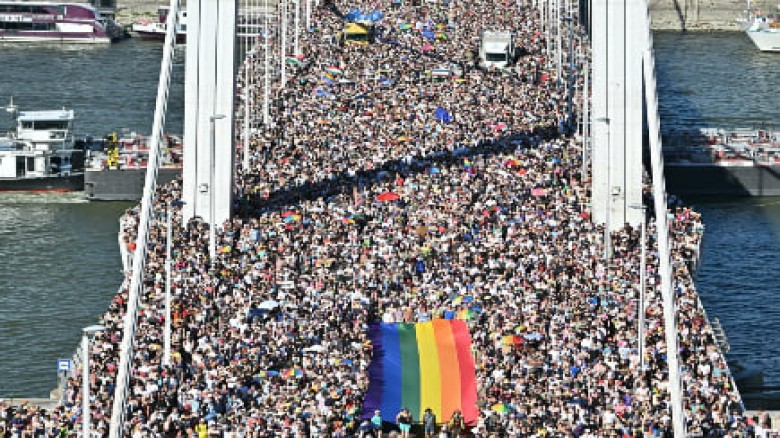
Despite the ban, last year’s Budapest Pride attracted a record crowd, with organisers saying around 200,000 people attended. The march became a major symbol of opposition to Orbán’s government and its rollback of rights.
Police have now said there are no grounds to ban the 2026 Pride parade, which is planned for 27 June.
Organisers of Budapest Pride welcomed the decision and said they hoped this year’s event would continue to represent equal rights and a democratic Hungary.
Police also said three counter-demonstrations may take place, but under restrictions to keep them separate from the Pride march.
Although Magyar has spoken in favour of equality and freedom of assembly, his government has not yet reversed Orbán-era legislation targeting Pride events. However, EU officials appear confident that Hungary is moving toward reforms that will bring it back in line with European standards.
The decision to release frozen funds is seen as a major political signal from Brussels that Hungary’s new government is being given a chance to reset relations with the European Union.


Leave A Comment