









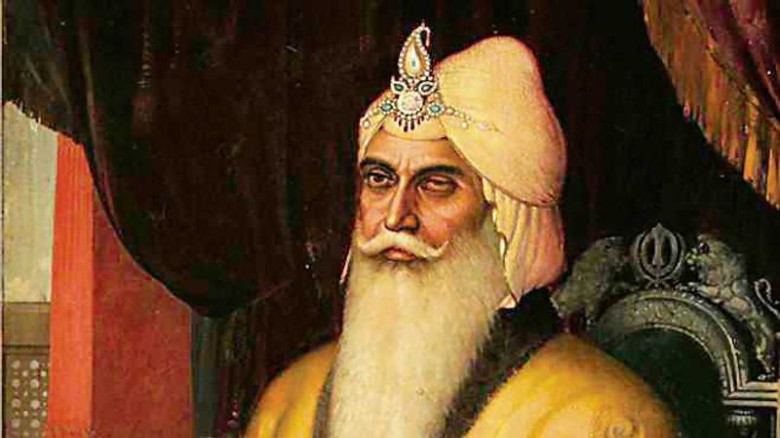
Tipu Sultan’s Pistols and Maharaja Ranjit Singh’s Painting Set Auction Records in the UK
A pair of pistols once belonging to Tipu Sultan and a rare painting of Maharaja Ranjit Singh have set new records at Sotheby’s auction in London, highlighting the growing global demand for historic Indian art and artefacts.
The auction, titled ‘Arts of the Islamic World and India’, held on Wednesday, achieved a total of over £10 million, with several Indian lots surpassing their estimated values by wide margins.
Tipu Sultan’s silver-mounted flintlock pistols, made specially for the 18th-century ruler known as the “Tiger of Mysore,” were sold to a private collector for an astonishing £1.1 million — nearly 14 times their pre-sale estimate. These weapons are believed to have been seized during the 1799 siege of Seringapatam, where Tipu Sultan was killed fighting British forces. His firearms and other treasures were subsequently taken to Britain by soldiers of the East India Company.
Sotheby’s noted that Tipu Sultan’s pistols were uniquely crafted in mirrored pairs — one with a left-hand lock and the other with a right-hand lock — a feature often seen among his ceremonial arms displayed during royal audiences. Another of his weapons, a silver-mounted flintlock blunderbuss or bukmar firearm, also sold for £571,500.
Meanwhile, a stunning 19th-century painting by artist Bishan Singh depicting Maharaja Ranjit Singh — the founder of the Sikh Empire — in a grand procession through a Lahore bazaar, set a new auction record for Sikh art. The intricate artwork was acquired by an institution for £952,500.
“This wonderfully detailed processional scene depicts Maharaja Ranjit Singh riding his elephant through a bazaar in Lahore,” Sotheby’s catalogue described. “He is accompanied by his court entourage, including chowrie and chatra bearers, his falconer, carriages carrying his son Sher Singh, a courtesan, and his advisors Bhai Ram Singh and Raja Gulab Singh. In the foreground, ascetics and street performers seek his attention, while craftsmen and vendors trade their wares.”
Other Indian treasures also drew strong bidding. The first lot of the sale — a rare late 16th-century Quran manuscript from the library of Mughal Emperor Akbar — triggered a 15-minute bidding war before being sold for £863,600.
A collection of 52 paintings of Indian costumes, held by the same family for 225 years since the original commission, fetched £609,600. Additionally, a Mughal jade “horsehead” hilted dagger and scabbard sold for £406,400, while a 17th-century painting of elephants frolicking in a mountain lake achieved £139,700.
Sotheby’s reported that 20 percent of the buyers were new to the auction house, with bidders participating from 25 countries — including India. The results, the auction house said, reflect the “continued international appeal and cultural significance” of India’s historical art and royal artefacts.


Leave A Comment