









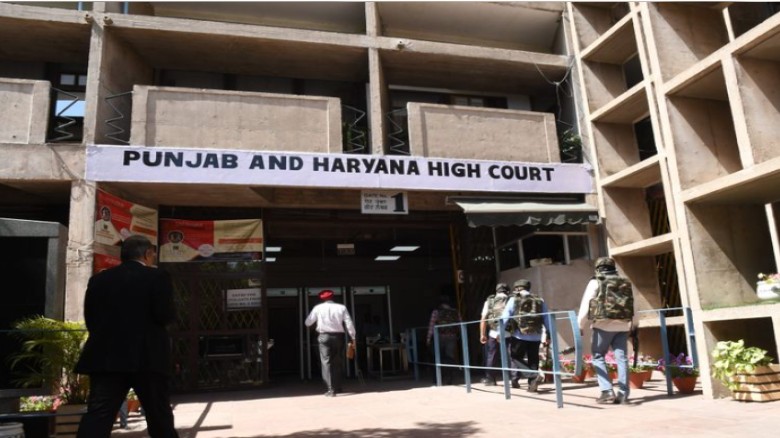
Punjab and Haryana High Court Orders Employee Benefits from 2013, Rejects Delayed Payments After Regularisation
The Punjab and Haryana High Court has ruled that government employees whose services are regularised with retrospective effect cannot be denied the actual employment benefits arising from that regularisation without a valid legal justification.
In a judgment reported on Thursday, November 19, 2026, Justice Kuldeep Tiwari directed the Punjab Government to grant an employee all actual benefits arising from his regularisation with effect from March 28, 2013.
The decision came in response to a writ petition challenging the government's decision to recognise the employee's regular service from March 2013 while granting actual benefits only from May 8, 2023.
The dispute began after the Punjab Director-General of School Education issued an order on November 28, 2013, terminating the employee's services on the grounds that he lacked the required educational qualifications when he was initially appointed.
The employee challenged the termination order before the High Court, arguing against the government's decision to remove him from service.
On May 8, 2023, a coordinate Bench of the High Court disposed of the earlier petition and restrained the authorities from implementing the termination order.
During those proceedings, the court considered that the employee had obtained a higher educational qualification while in service and had performed his duties for approximately 13 years with a satisfactory professional record.
Following the earlier judgment, the Punjab authorities issued an order on January 2, 2024, regularising his services retrospectively from March 28, 2013.
However, the government restricted his actual financial and service-related benefits to May 8, 2023, the date of the earlier High Court decision, rather than the recognised regularisation date.
The employee subsequently filed a fresh writ petition challenging this distinction. He was represented by advocates Kapil Kakkar and Shreesh Kakkar.
Justice Tiwari examined whether the government had any legal or statutory authority to recognise an earlier regularisation date while postponing the corresponding actual benefits.
The court found that the state had failed to identify any applicable service rule or government instruction authorising such a distinction.
The Bench also rejected the government's objection that the fresh petition was barred by the legal principle of res judicata, which generally prevents matters already decided by a competent court from being litigated again.
The court clarified that the earlier proceedings concerned the employee's entitlement to regularisation, while the new petition challenged the denial of benefits after retrospective regularisation had already been granted.
Allowing the petition, Justice Tiwari held that the employee was entitled to actual benefits with effect from March 28, 2013.
The High Court directed the Punjab authorities to release all consequential benefits within three months of receiving a certified copy of the judgment.
The ruling addresses the legal consequences of retrospective regularisation and establishes that, in the circumstances of this case, the government could not postpone actual benefits without identifying a lawful basis for doing so.


Leave A Comment