









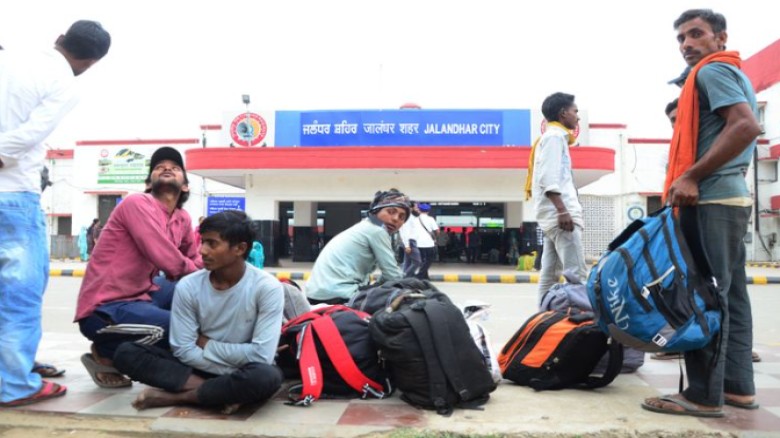
Punjab Elections 2027: Migrant Workers' Economic Role and Voting Rights Come into Political Focus
The role of migrant workers in Punjab's economy and electoral politics has attracted renewed discussion ahead of the 2027 Assembly elections, with questions surrounding employment, social integration and voting rights receiving increased attention.
An opinion article published in The Tribune on November 3, 2026, examined the relationship between migration and politics, highlighting the importance of workers who have moved to Punjab from other Indian states.
Punjab has attracted migrant workers for decades, particularly from states including Bihar and Uttar Pradesh, because of employment opportunities in agriculture, manufacturing, construction and services.
Migrant labour plays a significant role in the state's agricultural economy, with workers participating in seasonal activities such as paddy transplantation, harvesting and other labour-intensive operations.
Industrial centres including Ludhiana and Jalandhar also employ workers from outside Punjab in manufacturing, textiles, engineering and other commercial activities.
The availability of migrant labour is an important consideration for businesses, although the scale of employment and working conditions varies across industries and locations.
Alongside economic contributions, migration has become part of wider political discussions about identity, language, employment opportunities and access to public services.
Questions concerning migrant voters have attracted attention as political parties prepare for the next Assembly election. Indian citizens who satisfy the legal requirements for voter registration can enrol in the constituency where they are ordinarily resident.
Voting eligibility is determined by electoral law, including age, citizenship and ordinary residence. A person's place of birth or home state does not automatically prevent them from registering to vote in Punjab.
At the same time, voters cannot lawfully remain registered in multiple constituencies. Electoral registration and verification procedures are intended to maintain accurate voter lists.
The public discussion also concerns the experiences of migrant families who have lived in Punjab for extended periods and developed social, educational and economic connections with local communities.
Political claims linking migration to broader social or economic problems require examination against reliable evidence. The presence of migrant communities does not, by itself, establish responsibility for unemployment, crime or pressure on public services.
The relationship between migration and Punjab's political landscape therefore involves several distinct issues, including labour demand, social integration, electoral registration and government policy.
As the 2027 Assembly elections approach, debates about migrant workers and voting rights remain part of the wider public discussion about Punjab's economy and society.


Leave A Comment