

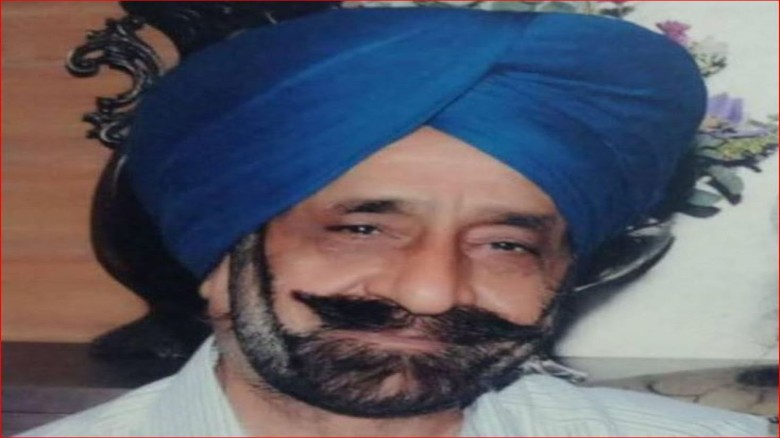
Physicist and Science Writer Dr Vidwan Singh Soni Dies in Patiala at 83
Physicist and Science Writer Dr Vidwan Singh Soni Dies in Patiala at 83
Eminent educationist, physicist and award-winning popular science writer Dr Vidwan Singh Soni died in Patiala on Friday, September 4, following health-related ailments. He was 83.
A former principal of Government Mohindra College in Patiala and Government College, Ropar, Soni spent more than three decades in education and built a distinctive body of work spanning physics, science communication, fossils and prehistoric archaeology.
He is survived by two daughters and a son.
More than three decades in education
Trained as a physicist, Soni devoted much of his professional life to teaching.
He served as principal of Government Mohindra College, Patiala, and Government College, Ropar, and was also associated with Punjabi University as a Fellow.
His academic interests included the Special Theory of Relativity, while his textbooks helped introduce generations of students to mechanics and related areas of physics.
His book Mechanics and Relativity went through several editions, reflecting his long involvement in undergraduate physics education.
Passion for fossils and prehistoric life
Soni’s scientific interests extended well beyond theoretical physics.
He developed a deep fascination with fossils, rocks and prehistoric stone tools, particularly material discovered in the Shivalik and north-western sub-Himalayan regions.
Over several decades, he travelled through the region searching for fossils and Stone Age artefacts and documenting evidence connected with prehistoric life.
His collection included fossils belonging to a range of animal species as well as prehistoric stone tools.
Some of the material collected through his research was later exhibited at Punjabi University in Patiala.
Research conducted with son Anujot Singh Soni
Soni also worked closely with his son, Dr Anujot Singh Soni, on research into fossils and prehistoric tools found in the north-western sub-Himalayas.
Their work documented different forms of stone tools, including pitted cobbles and edge-ground implements.
The father-son team contributed to academic research examining the chronology and context of archaeological material discovered in the Shivalik region.
Punjabi University later involved them in establishing a fossil museum intended to introduce students, researchers and members of the public to prehistoric life and archaeological discoveries.
Combining physics with prehistory
Soni’s career was unusual for the breadth of subjects he pursued.
While continuing his work in physics and relativity, he developed expertise and interest in palaeontology and prehistoric archaeology.
His fossil and stone-tool research sought to document traces of earlier animal life and human activity in the sub-Himalayan landscape.
The work brought together field exploration, collection, scientific documentation and public education.
Taking science to Punjabi readers
Alongside his academic research, Soni became known for communicating science in Punjabi.
He believed scientific ideas should not remain confined to specialist classrooms or English-language academic literature and wrote for readers interested in understanding science in their own language.
His Punjabi book Dilchasap Kahani Dharti Amber Di was released at a literary gathering in Patiala in 2023.
The work reflected his wider effort to make subjects concerning the Earth, space and science more accessible to general readers.
Interest in scientific translation
Soni also contributed to discussions about translating scientific material into Indian languages.
At a National Translation Mission programme, he addressed challenges involved in translating natural-science texts.
His approach emphasised preserving the scientific meaning of technical concepts while presenting them in language that ordinary readers and students could understand.
Recognition for scientific contribution
Soni received recognition for his contribution to education, popular science writing and the study of fossils and prehistoric material.
His work demonstrated an uncommon ability to move between theoretical physics, field-based exploration, science writing and education.
For students, he was a teacher and textbook author. For general readers, he was a science communicator. His fossil and prehistoric research added another dimension to a career built around curiosity about both the physical universe and the distant history of life on Earth.
Dr Vidwan Singh Soni leaves behind a legacy that crossed traditional academic boundaries and helped bring scientific knowledge closer to students and Punjabi-language readers.


Leave A Comment