









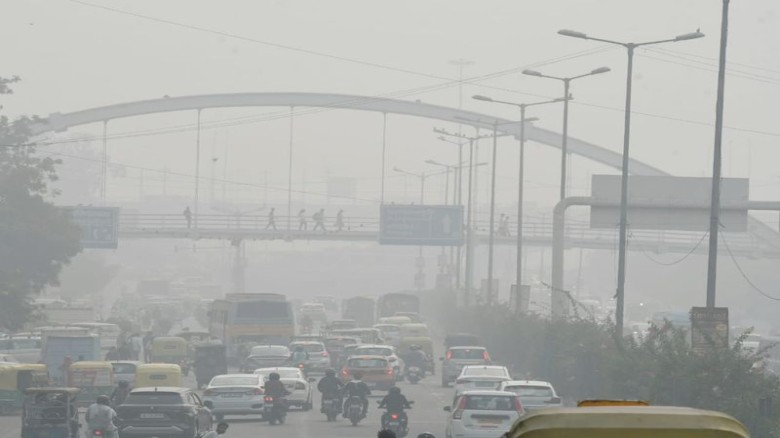
Study Finds Delhi’s Indoor Air as Harmful as Outdoor Smog, Fungal Spores 12 Times Higher Than WHO Limit
Study Finds Delhi’s Indoor Air as Harmful as Outdoor Smog, Fungal Spores 12 Times Higher Than WHO Limit
As Delhi prepares for its annual battle with winter smog, a new scientific study has revealed a shocking truth — the air inside many city homes may be just as hazardous as the air outside. The research, conducted jointly by Delhi University’s Satyawati College, Jamia Millia Islamia, and South Dakota State University (USA), found fungal spores inside homes up to 12 times higher than the World Health Organisation (WHO) safety limit, while bacterial levels were 10 times higher.
The study, published in Frontiers in Public Health (2025), warns that long-term exposure to such high microbial concentrations can trigger a range of health issues including skin allergies, respiratory problems, and anxiety among residents.
Toxic Air Indoors: Fungal and Bacterial Surge
The study, titled “Microbial Indoor Air Quality Assessment and Health Correlations in Densely Populated Urban Areas of Delhi, India,” was based on a year-long survey of 336 homes across North Delhi’s slum clusters of Ashok Vihar and Azadpur — areas characterised by poor ventilation, damp conditions, and overcrowding.
Researchers measured the fungal concentration ranging from 1,330 to 6,050 colony-forming units (CFU) per cubic metre, compared to the WHO’s recommended limit of 500 CFU per cubic metre. This means some homes recorded 12 times more fungal spores than what is considered safe.
Similarly, bacterial concentrations varied between 730 and 5,300 CFU per cubic metre, while the WHO’s reference level is 500 CFU per cubic metre — showing more than a 10-fold increase in microbial contamination.
According to the researchers, most fungal particles were smaller than 2.5 microns, making them small enough to travel deep into the lungs and cause lasting respiratory and cardiovascular damage.
Seasonal Variations and Weather Links
The study identified a distinct seasonal trend in microbial activity.
-
Fungal levels rose gradually from winter, peaking between September and November — the months just before Delhi’s notorious smog sets in — reaching around 6,050 CFU per cubic metre.
-
Bacterial levels, on the other hand, increased from winter to summer and peaked in August, before dipping again in the fall.
Researchers attributed these patterns to changing humidity and temperature levels, which create favourable conditions for fungal and bacterial growth indoors.
Health Impact on Residents
The study recorded widespread health complaints among residents living in the surveyed areas. About 33% of respondents reported frequent headaches, while 23% experienced eye irritation or burning, and 22% suffered from persistent coughing and breathlessness. Another 18% reported sneezing and allergic rhinitis (hay fever), and 15% complained of skin irritation and itching.
Children and young adults emerged as the most vulnerable groups. Around 28% of children under 12 and 25% of young adults aged 18 to 30 experienced breathing difficulties, coughing, or allergy-related symptoms. The study explained that developing lungs, higher physical activity, and longer indoor exposure made children particularly at risk.
Women were also disproportionately affected, accounting for nearly 60% of all skin and eye irritation complaints. Researchers linked this to their longer indoor exposure times, especially in households with limited ventilation.
Indoor Air Nearly as Dangerous as Outdoor Pollution
The authors noted that high fungal and bacterial levels inside homes in densely populated parts of Delhi make indoor air quality nearly as hazardous as the smog outside. They warned that these microbial pollutants could combine with outdoor fine particulate matter (PM2.5 and PM10), worsening air toxicity and amplifying respiratory illnesses such as asthma and bronchitis.
“People tend to believe they are safer indoors when air quality outdoors deteriorates. However, this study clearly shows that indoor air in many Delhi homes is equally contaminated, if not worse,” said one of the lead researchers from Jamia Millia Islamia.
Call for Better Ventilation and Hygiene
The researchers stressed the urgent need for improving household ventilation, reducing dampness, and maintaining indoor hygiene to lower microbial contamination. Simple interventions such as dehumidifiers, regular cleaning of air filters, and increased airflow through open windows and exhaust systems can help reduce the microbial load.
They also called on policymakers to include microbial air monitoring in India’s urban air quality assessment programs, which currently focus only on particulate and chemical pollutants.
A Silent Indoor Health Crisis
The findings come at a crucial time when Delhi’s Air Quality Index (AQI) is expected to worsen as winter approaches. While residents often seal their windows to escape outdoor pollution, the study warns that such practices may trap harmful bacteria and fungi inside, creating a “microbial smog” indoors.
The researchers concluded that indoor air pollution deserves as much policy attention as outdoor pollution, particularly in densely populated, low-income neighbourhoods. “Addressing microbial air quality is essential to protect public health — especially children, women, and the elderly — who spend most of their time indoors,” the study stated.
With both indoor and outdoor air in Delhi showing alarming levels of contamination, experts fear that without immediate interventions, the city’s respiratory health crisis could deepen further in the coming years.


Leave A Comment